

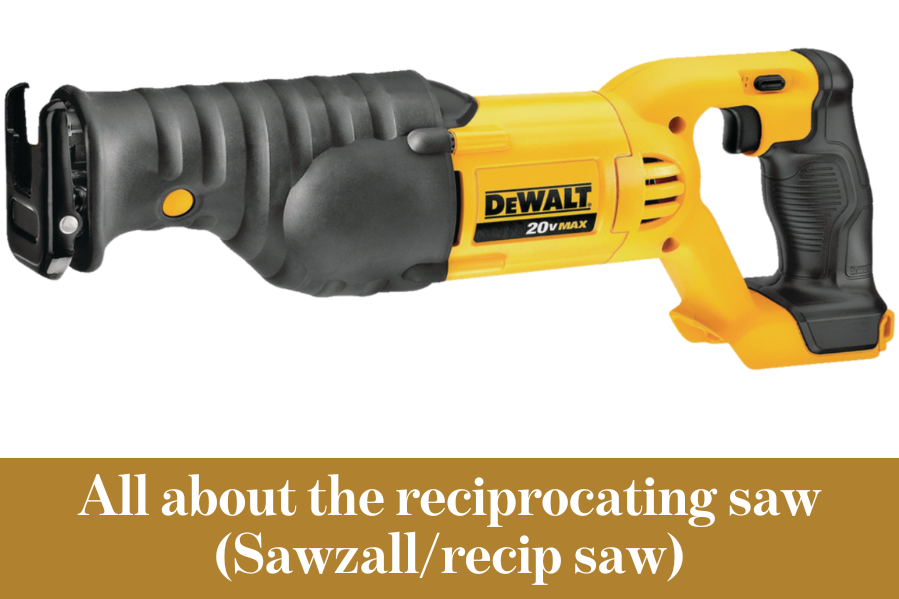
Definition: a power tool with a blade that moves back and forth rapidly to cut through various materials like wood, metal, or plastic; commonly used for demolition, construction, and pruning
What exactly is a reciprocating saw?
A reciprocating saw (also known as a Sawzall or a recip saw) is a versatile, handheld power tool commonly used in construction, demolition, and renovation projects. It features a straight, exposed blade that moves back and forth in a reciprocating motion, comparable to the way a manual saw is pushed and pulled.
This motion allows the tool to make fast, rough cuts through a wide variety of materials, including wood, metal, PVC, drywall, plaster, and even masonry.
These are particularly valued for their ability to reach tight spaces and awkward angles. Often used for tasks like cutting pipes, removing old framing, trimming tree branches, and tearing down structures, this tool’s speed, power, and interchangeable blades make it a go-to choice for both professionals and DIY enthusiasts.
The Anatomy of a Multi/ Oscillating Tool

Key components of a reciprocating saw
Motor
- provides the power that drives the reciprocating motion (back and forth) of the blade
- can be electric (corded or cordless) or pneumatic (air-powered)

Trigger/ speed control
- controls the on/off function and sometimes the speed of the saw
- some models offer variable speed triggers

Shoe (or Footplate):
- flat piece at the front of the saw that rests against the material being cut
- providing stability and guiding the saw during operation

What sort of tasks can be accomplished?
Demolition
- can cut through a wide range of materials (including wood, metal, drywall, and even embedded nails), making it ideal for tearing down structures

Metalwork
- used for cutting through various types of metal, including steel, aluminum, and copper
- especially useful for cutting in tight spaces, making it a popular tool for tasks like plumbing, HVAC work, and vehicle repairs

Construction
- for cutting and modifying materials like wood, drywall, metal, and plastics
- excels at tasks such as cutting framing, trimming beams, resizing materials, and creating openings in walls

Pruning
- can cut through tree branches, shrubs, and roots with ease
- with a pruning blade, it offers precise and quick cuts

Scraping glue/ other adhesives
- scraper blade is designed to slide underneath adhesive materials, allowing each thrust of the scraper to progressively lift more adhesive with each movement

Removing grout
- grout rake attachment has a slightly curved blade with a coarse-grit surface that moves through grout with ease

Things to consider when choosing a reciprocating saw

Corded:
- Pros: consistent power, no charging, lighter, more affordable
- Cons: limited mobility, needs an outlet, cord can be a hazard
Cordless:
- Pros: portable, easy setup, versatile for tight spaces
- Cons: limited battery life, heavier, less consistent power, higher cost

Brushed:
- Pros: affordable and simpler design, easy to maintain and repair, reliable for basic tasks
- Cons: less efficient, generates more heat, shorter lifespan due to wear on brushes, requires more maintenance
Brushless:
- Pros: higher efficiency and more power, longer lifespan, no brushes to wear out, quieter operation and less heat
- Cons: more expensive upfront, repairs can be more complex

The amp rating of a reciprocating saw indicates the motor’s power output, with higher amps meaning more cutting strength and efficiency.
- Low (6–8 amps): suitable for light tasks like cutting small branches or thin materials; Ideal for occasional DIY use
- Medium (9–11 amps): balanced for medium-duty work, such as home renos or cutting thicker wood and metal
- High (12–15 amps): designed for heavy-duty tasks like demolition and cutting dense or thick materials; preferred for professional use

The speed of a reciprocating saw is measured in strokes per minute (SPM) rather than RPM (rotations per minute), since the blade moves back and forth rather than rotating.
Common SPM Ratings:
- 0–2,500 SPM: suitable for light, controlled tasks like cutting thin wood or plastic
- 0–3,000+ SPM: ideal for faster, aggressive cuts in tougher materials like metal or dense wood
Many feature variable speed triggers, allowing users to adjust the SPM for precision or power depending on the material being cut.
How to choose the right blade for a reciprocating saw
Choosing the right reciprocating saw blade depends on the material you’re cutting and the type of cut you need.

- Short (4–6 inches): for precise cuts and tight spaces
- Medium (7–9 inches): most versatile for general-purpose cutting
- Long(10–12+ inches): for deeper cuts or flexible cutting in tough-to-reach areas

- High carbon steel (HCS): flexible and durable for wood and plastic
- High-speed steel (HSS): rigid and heat-resistant for metal cutting
- Bi-Metal: combines flexibility and toughness for cutting both wood and metal
- Carbide-tipped: ultra-durable for heavy-duty tasks like cutting dense wood, metal, or masonry

“Teeth per inch” (TPI) is a measurement used to describe the number of teeth on a saw blade within a one-inch length of the blade. It is an important factor that affects the performance and type of cuts that the blade can make.

- Wood: use a blade with fewer teeth per inch (TPI), typically 5–10 TPI, for fast rough cuts
- Metal: choose a fine-tooth blade, 10–18 TPI for thin metals or 20–24 TPI for thicker metals
- Wood with nails/demolition: look for a combination blade (6–10 TPI) designed for cutting through wood and embedded nails
- Plastic: use medium TPI (8–14 TPI) for clean cuts.
- Pruning: opt for a coarse-tooth blade (3–5 TPI) for fast, aggressive cuts through branches.

References:
https://en.wikipedia.org/wiki/Reciprocating_saw; https://www.bobvila.com/articles/reciprocating-saw-uses; https://canadianwoodworking.com/tools/7-considerations-when-buying-a-reciprocating-saw/; https://canadianwoodworking.com/tools/reciprocating-saw/; https://www.familyhandyman.com/list/master-the-reciprocating-saw/; https://canadianwoodworking.com/tools/reciprocating-saw-blades/; https://www.toolstop.co.uk/blog/knowledge-base/what-is-a-reciprocating-saw; https://www.homebuilding.co.uk/advice/what-is-a-reciprocating-saw; https://www.craftsman.com/blogs/news/reciprocating-saws-frequently-asked-questions; https://www.dewalt.com/product/dcs384b/20v-max-xr-brushless-cordless-reciprocating-saw-tool-only?tid=577756; https://www.lowes.com/n/buying-guide/choose-best-reciprocating-saw-blade; https://www.homedepot.com/c/ab/best-reciprocating-saw-blades-for-your-project
Chat GPT: reciprocating saw basics


I'd love to know what you think!