

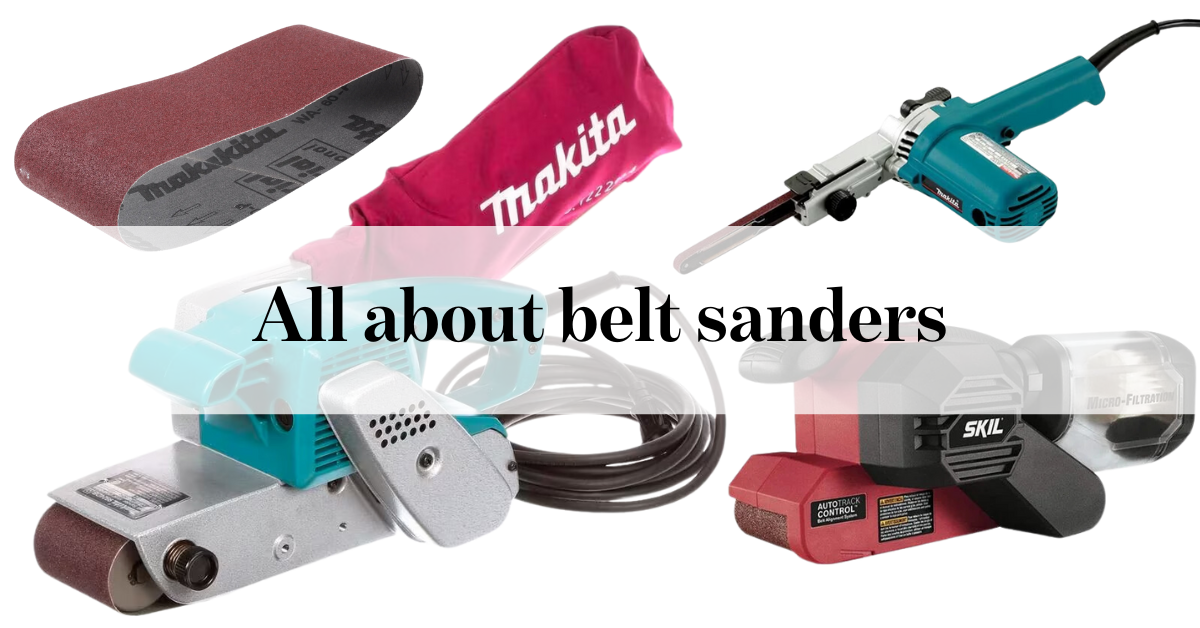
Definition: a power tool that uses a continuous loop of sandpaper to smooth and shape surfaces quickly and efficiently, making it ideal for wood & metal working projects
What exactly is a belt sander?
So, I haven’t ever used a belt sander before but I need to when I reapply a sealant to my deck this year! A learning for all of us 😊
A belt sander is a versatile power tool designed for sanding and shaping various materials. It features a continuous loop of sandpaper, known as a sanding belt, which rotates around two cylindrical drums driven by an electric motor.
Belt sanders are commonly used in woodworking for tasks such as removing rough surfaces, leveling uneven areas, and smoothing edges.
One of the key advantages of belt sanders is their efficiency in removing material quickly, making them particularly useful for large-scale projects or when working with dense materials.
Additionally, belt sanders are relatively easy to operate, requiring minimal effort from the user to achieve smooth and consistent results.
The Anatomy of a belt sander

Types of belt sanders
Belt sanders fall into two basic categories: handheld belt sanders that can be easily taken to the workpiece and bench models where the work is taken to the stationary machine.
- Handheld:
- commonly used for DIY and remodeling tasks
- can be moved back and forth across large surfaces, rapidly stripping old finishes from doors, tables, beams, or joists
- ability to remove material quickly also makes them ideal for flattening rough boards or initial sanding to remove imperfections
- a wide belt sander is usually a woodworking tool, and it invariably includes a dust bag; those with narrow belts (also called power files) can often be used on metal, and may not have a dust bag

- Benchtop:
- usually fixed to a bench
- belt can run horizontally, and it can also be tilted at any angle up to 90 degrees on many models
- in addition to sanding flat surfaces, are often very useful for shaping
- can also remove material rapidly, but offer the versatility for detailed work, too
- some models also incorporate a disc sander on the side of the machine; comes with a sanding table that can often be tilted up to 45 degrees and a miter guide
- combining these two features allows for compound angles to be set, thus increasing the range of belt sander uses

Advantages & Disadvantages of a belt sander
Advantages
- are very aggressive and can remove a lot of material from surfaces in very little time
- typically have a wide sanding surface, enabling users to cover larger areas
- excel at sanding in straight lines, which is useful for tasks like refinishing floors or smoothing long edges
- often equipped with powerful motors, providing ample force for demanding sanding tasks
Disadvantages
- can be too aggressive for delicate or precision work, leading to over-sanding and damage
- challenging to achieve precise results, especially in intricate or curved areas
- continuous use can generate significant heat, potentially leading to damage
- produces a large amount of dust and debris
- can be loud and produce significant vibration, which may cause discomfort or fatigue with prolonged use
How to use a belt sander
- Safety gear
Put on safety gear including safety goggles or glasses to protect your eyes from flying debris, and a dust mask to prevent inhalation of dust particles
- Power on
Plug in the sander or turn on the power source if it’s cordless; Make sure the power switch or trigger is in the off position before plugging in the sander
- Start sanding
Hold the belt sander firmly with both hands, ensuring a secure grip.
Turn on the sander and allow it to reach full speed before making contact with the workpiece.

- Maintain control
Always maintain control of the sander by keeping a firm grip and staying aware of any vibrations or changes in the feel of the tool.
- Clean-up
Clean up any dust and debris generated during sanding using a vacuum or brush.

Here are some video examples of using a belt sander


Safety Precautions
When it comes to sanding, prioritizing safety precautions like wearing ear protection, anti-vibration gloves, and a respirator is paramount.
Ear protection: click here for more info
- The constant high-frequency noise generated by sanders can lead to hearing damage over time, making ear protection essential for safeguarding against long-term hearing loss
Anti-vibration gloves: click here for more info
- Additionally, the vibrations produced by sanding machinery can cause hand-arm vibration syndrome (HAVS), resulting in symptoms like numbness, tingling, and reduced grip strength.
- help minimize these effects, ensuring comfort and reducing the risk of injury during prolonged use
Respirator: click here for more info
- sanding generates fine particles of dust that can pose serious respiratory hazards, particularly when working with toxic materials or in poorly ventilated spaces
- A respirator provides crucial protection against inhaling harmful dust particles, safeguarding respiratory health and promoting a safe working environment.
By incorporating these safety measures into sanding routines, woodworkers can mitigate risks, protect their health, and continue to pursue their craft safely and effectively.

References:
https://www.doityourself.com/stry/advantages-to-using-a-belt-sander
https://www.bhg.com/how-to-use-a-belt-sander
https://www.bobvila.com/articles/how-to-use-a-belt-sander/
https://www.familyhandyman.com/article/everything-you-should-know-about-belt-sanders/
https://www.familyhandyman.com/list/best-belt-sanders/




I'd love to know what you think!