

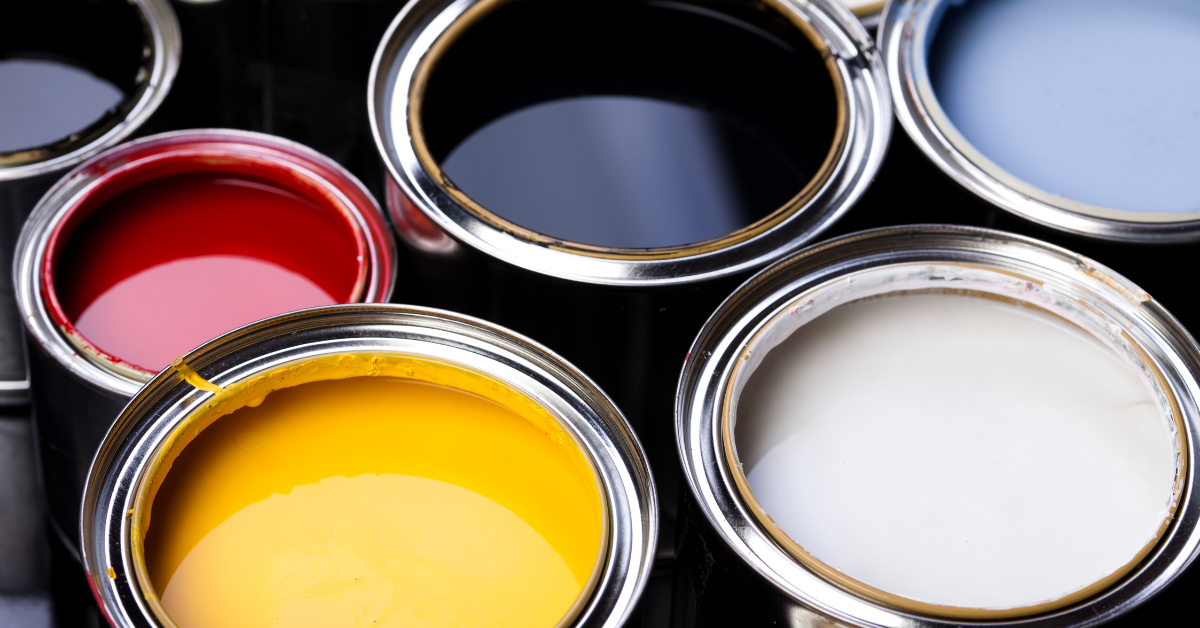
Definition: a coloured liquid or paste that is applied to surfaces to add color, protect the surface, or for decorative purposes; typically consists of pigments, binders, solvents, and additives
What exactly is paint?
Paint is a mixture of four basic ingredients: pigments, resins, solvents, and additives.

Water-based vs Oil-based Paint
Paints can be broadly classified into two categories based on their solvents: water-based and oil-based.
WATER BASED
- Uses water as the solvent
- types include: latex and acrylic
- commonly referred to as “latex” even though there is no latex in the formulation
- many water-based paints contain acrylic binders and may be labeled as “acrylic latex”
- odour & VOC’s: typically have a lower odour and emit fewer VOC’s
- dry time: dry relatively quickly, allowing for faster project completion; often touch-dry in a matter of hours
- clean-up: easy cleanup with water; brushes and rollers can be cleaned with water, reducing the need for harsh solvents
- other: more flexible than oil-based, making them less prone to cracking or yellowing over time
OIL-BASED
- can be misleading since it typically doesn’t contain oil
- also known as alkyd paint
- (alkyd is a polyester resin modified by the addition of fatty acids and other components; however there are now water-based versions of alkyd paint too)
- composed of pigments suspended in an oil-based binder, usually linseed oil, mineral spirits or a synthetic resin
- odour & VOC’s: have a stronger odor and higher VOC content; proper ventilation is required
- dry time: may take several hours or even days to fully dry, depending on environmental conditions
- clean-up: requires the use of solvents such as mineral spirits; can be less convenient and more environmentally impactful
- other: often provide a more durable and glossy finish; resistant to wear and may be preferable for high-traffic areas or surfaces that require extra protection
What are different types of paint used for?
Latex paint

- commonly used for interior and exterior walls in residential and commercial settings
- versatile, quick-drying, and easy to clean up with water
- when you hear “latex paint” in the context of household paint, it’s essentially referring to a type of water-based paint that uses synthetic polymers, usually acrylic resins, as binders
- Examples:
- flat latex for walls, satin or eggshell latex for living spaces
- semi-gloss or gloss latex for trim and doors
Enamel paint

- available in both oil-based and water-based formulations, are known for their hard, glossy finish
- are often used for furniture, cabinets, and decorative pieces
- dries to a hard and durable surface, making it resistant to scratches and wear; particularly desirable for surfaces that undergo frequent use or contact
- proper surface preparation and ventilation are crucial during application due to the presence of solvents
Spray paint

- convenient for covering large surfaces or achieving an even finish on complex objects
- comes in an aerosol can
- suitable for various materials, including metal, wood, and plastic
- essential to use it in well-ventilated areas or outdoors to avoid inhaling fumes
- proper surface preparation is crucial for achieving optimal adhesion and finish
Acrylic paint

- uses an acrylic polymer emulsion as its binder, which is a water-based substance
- this binder creates a flexible and durable film when the paint dries
- widely used in art and craft projects
- adheres well to various surfaces and dries quickly
Epoxy paint

- provides a durable and chemically resistant finish
- commonly used on floors, countertops, and in industrial settings
- true epoxy paint is composed of two components— a resin and a hardener; components need to be mixed together in precise proportions to initiate the curing process
- mixing of the epoxy resin and hardener triggers a chemical reaction known as curing or polymerization; this chemical reaction transforms the liquid mixture into a solid, durable, and resilient material

References:
http://ultrafinishpainting.com/painting-101-what-is-paint-made-of/
https://www.thespruce.com/paint-everything-you-need-to-know-4119889
Chat GPT: Tell me about paint
https://www.forbes.com/home-improvement/painting/types-of-paint-for-indoor-project
Alkyd Resins, Organic Chemistry, vol. 29, Elsevier, 1977, pp. 140–170, doi:10.1016/b978-0-12-618502-7.50010-6, ISBN 978-0-12-618502-7, retrieved 2021-05-14
https://www.angi.com/articles/types-paint-explained.htm




I'd love to know what you think!